
Stem borer
Causal organism
Scirpophaga incertulas
Symptoms
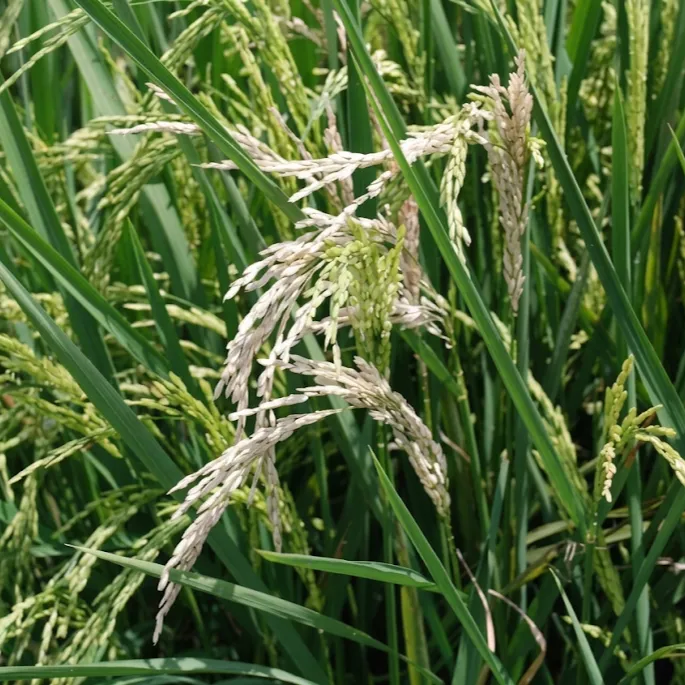
Deadheart: During the vegetative stage, the central shoot of an affected tiller turns brown, dries up and dies. The dead central shoot can often be pulled out easily from the base. Whitehead: During the reproductive stage, the emerging panicle becomes whitish, dries prematurely and contains unfilled or empty grains. Tiny holes may be visible on the stem or tiller where the caterpillar entered. When an affected stem is split open, a caterpillar, feeding tunnel or accumulated frass (insect excreta) may be found inside. Severe infestation reduces the number of productive tillers and can cause extensive crop damage. Diagnostic distinction: Deadhearts are characteristic of stem borer injury during vegetative growth, whereas whiteheads are characteristic during reproductive growth. These symptoms can resemble other problems, so inspect the stem for borer larvae, tunnels and frass.
Description
Stem borer variants: Yellow stem borer — Scirpophaga incertulas White stem borer — Scirpophaga innotata Striped stem borer — Chilo suppressalis Gold-fringed stem borer — Chilo auricilius Dark-headed striped stem borer — Chilo polychrysus Pink stem borer — Sesamia inferens